A Seasonal Checklist for Exploring the Neighborhood During Rainy Days
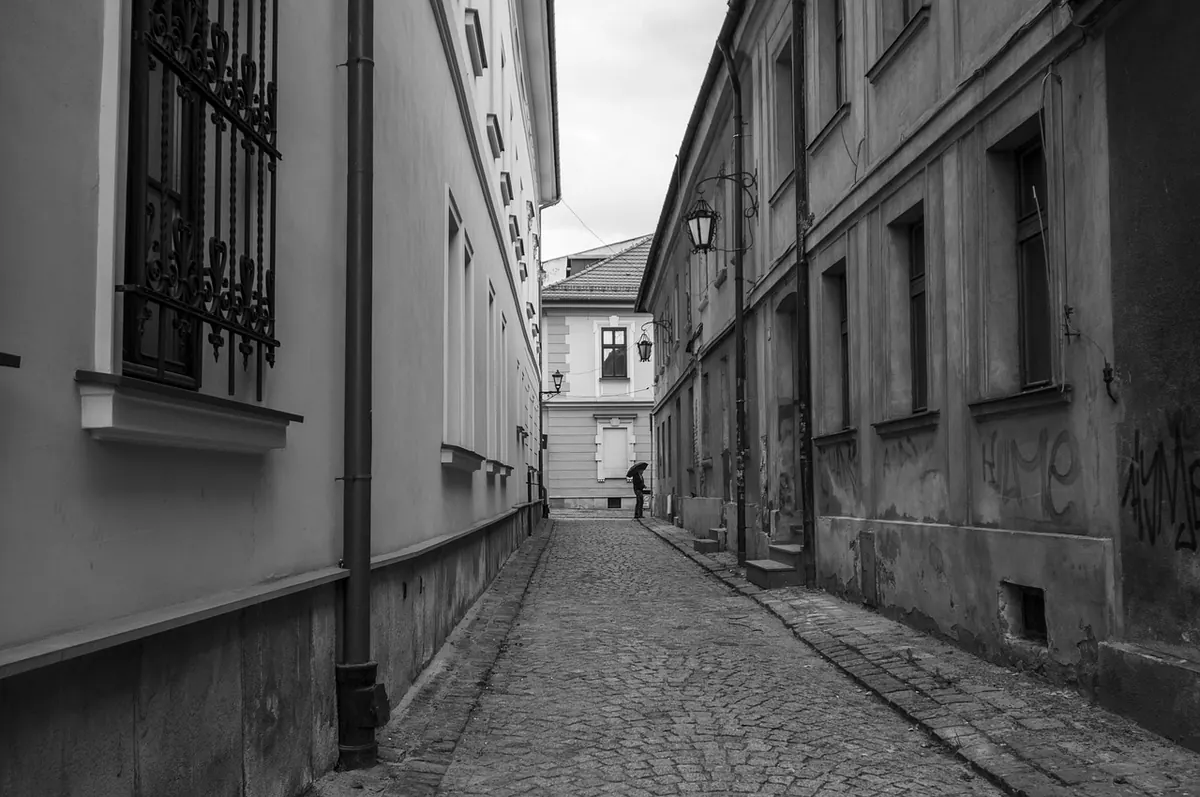
Rain empties a neighborhood faster than almost anything else. Awnings come down, chairs go in, the corner where everyone usually stands and talks becomes a stretch of dark, moving water. For an hour or two the street belongs to delivery drivers, shopkeepers with squeegees, and whoever forgot their umbrella. Most people treat that as a reason to stay indoors. It isn't. Wet weather rearranges the things you look at — reflections, sheltered edges, the routines that only show themselves when the usual crowd is gone — and a little preparation lets you walk out into it and actually see what's there.
What follows is a checklist, not a route. It works on a Tuesday in November and a Thursday in April, in a town center or a residential quarter a few stops out. Take the parts that suit the weather you get.
Ten minutes of preparation buys an hour of comfortable wandering. The point isn't to stay dry — you won't, entirely — but to stop being distracted by being wet.
Decide one thing before leaving: pick a single direction and commit to it. Rain rewards the walk that loops back on itself, not the one that zigzags in search of a dry block.
Look down before you look up. Wet ground is the cheapest way to see the upper half of a building you've walked past for years without raising your eyes.
Find a puddle that has settled on level ground — the shallow ones on a slope are useless, they break up the image. Stand at the low end and look into it: cornices, shutters, a wrought-iron bracket, the top half of a sign you've only ever read from underneath. The reflection reverses the lettering, which is a fair test of how long a business has been there; older painted signs have a symmetry that newer vinyl doesn't.
Then notice what wet does to color. Dark asphalt swallows light, so anything painted or planted along it gets louder: a green door, a rolled awning, the orange of a roadwork barrier. Cobbles and setts go near-black and glossy. Concrete darkens in patches where water sits and pales where it drains, and that patchwork is a rough map of every hollow in the street.
Walk the middle of narrow lanes rather than hugging the wall; gutters hold water and roof drips land exactly where you'd stand. And at a junction, pause and look along the wet road both ways — the reflections of headlights and shop lamps stretch into long vertical strokes, and the street briefly reads like a diagram of where the light comes from.
Every street has a dry line. Under an arcade, beneath an awning, in the recess of a doorway, there's a strip of pavement that stays pale while everything else darkens. Follow it. It marks out the architecture more precisely than any drawing — how far the roof actually reaches, where the building above changes, where the next overhang begins.
And because the sheltered line is where people go, it's also where things get left. A folded chair outside a workshop. A crate of bottles. A doormat turned sideways. A bicycle chained under a portico with a plastic bag over the saddle. A saucer of food for a cat that is nowhere in sight. Small, unglamorous details that a sunny-day crowd walks straight past.
Use the shelter yourself, but don't take up residence. Standing in a doorway for a minute is fine; standing in a shop entrance while the owner watches you drip is a different thing. If you want to linger, buy something, or find a bench under a portico and stay out of the foot traffic.
Water is a developer. It darkens stone and reveals every repair, every patch of mortar, every streak running down a wall from a gutter that has been leaking longer than anyone living there can remember. Look for:
Photograph them if it helps, but keep it quick. The interesting thing about these details isn't that they're beautiful; it's that they're evidence. A patched threshold, a replacement brick, a downpipe that empties onto the pavement instead of into a drain: each is a small decision somebody made, and rain makes it legible.
This is the part worth planning around, because it has a schedule. Between the morning rush and lunch, the neighborhood runs on a different cast.
There's the shopkeeper who comes out with a squeegee, pushes a lake of water off the pavement into the gutter, then stands in the doorway and studies the sky. There's the person who unrolls the awning at the first fat drop and rolls it back up twenty minutes later. Deliveries arrive in clusters, drivers jogging the last ten meters with a crate held over their heads. Somebody is always moving a plant out of the rain and somebody else is always leaving one out. The bar fills earlier and empties later. A dog gets walked in a hurry, at exactly the same time as always, by someone who clearly does not enjoy it.
Sit somewhere dry with a view of the street for fifteen minutes and you'll learn more about how the place works than a month of walking through it at noon on a Saturday. Notice who checks the sky, who owns an umbrella, who doesn't, and which doors stay open whatever the weather. Those are the buildings that matter.
The checklist changes with the weather, so adjust it rather than repeating the same walk all year.
The purpose of all this is not to turn a walk in the rain into homework. It's to give yourself three or four things to look for, so a wet Tuesday becomes an hour you'd choose rather than one you endure. Pick two items from the pavement section, one from the sheltered line, one detail — and go.
A few practical notes to finish. Step carefully on worn stone near doorways, especially where the pavement changes level; wet stone and smooth soles are a bad combination, and a fall is the fastest way to end the outing. Shake out your umbrella before you go in anywhere. Don't photograph people's windows closely enough to see inside. And if you find a good sheltered spot with a view, remember it — the same corner will be worth returning to in the next rain, and the one after that.
Photo: whoismargot / Pixabay