Common Mistakes to Avoid When Exploring Residential Alleys
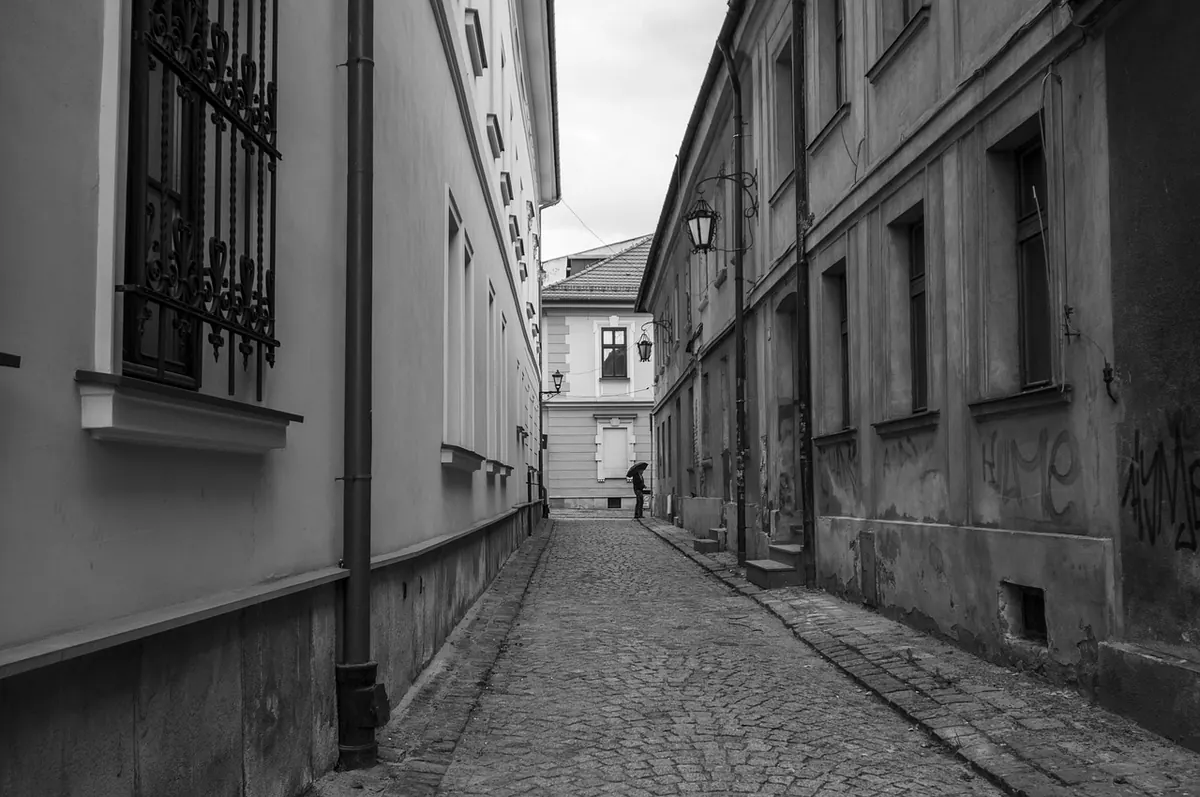
Every old town has one: the lane that starts behind the church, dips under an arch, and comes out somewhere better than where you began. It smells of basil and wet stone. Someone's radio is playing two houses down. Of course you want to keep walking. But a residential alley is not a corridor between sights; it is a row of front doors with a strip of sky above it. The mistakes below are the ordinary ones that turn a good walk into an intrusion, or into a turned ankle.
In July, the strip of shade beside a doorway is the coolest place in the neighbourhood, which is why the chairs are already there: a plastic seat, a crate turned upside down, a folded blanket on the step. That patch of ground belongs to someone who has been sitting in it every afternoon for forty years. Sitting down on the step, leaning into the doorway, or standing in the opening to cool off reads as friendly only if you live there.
Learn the small borders. A raised threshold, a doormat, a potted geranium, a house number, a curtain instead of a door: these mark where the public lane stops and a home begins. Peer into a kitchen once and the person inside has to decide whether to close the door on a stranger. Do not make them choose.
The same goes for courtyards. If the alley narrows, loses its name plate and ends in three doors around a single washing line, you have walked into a shared hallway without a roof. Look, nod, turn around.
Photographs of the alley itself — the balconies, the cobbles, the light between the walls — are one thing. Photographs of the people in it are another, and the difference is a raised eyebrow and a nod. If someone is hanging washing, sorting tomatoes, or repairing a chair in the lane, lift the camera slightly and catch their eye before you press anything. Most people will shrug, some will wave you on, a few will turn away. All three answers are final.
Children should stay out of your frame entirely, even in the background, even if they are only playing football against a wall. Windows are private property: a long lens aimed at an open shutter is not street photography, it is looking into someone's living room with extra steps. And do not rearrange the scene. Moving a bicycle, a crate of lemons or a cat's bowl for a cleaner composition turns a street into a stage set, and the owner notices the moment you have gone.
Stone walls, closed shutters and a lane a few paces wide make an excellent amplifier. A normal conversation between four people at the bottom of the alley is audible on the top floor. Add a phone call on speaker, a video played out loud, or a portable speaker, and you have installed a radio in someone's bedroom.
In many Italian towns, and plenty of others, the early afternoon belongs to rest, and so does the late evening. Walk quietly then, not because a sign says so but because a child is asleep a few feet above your head. Groups make this harder: eight people talking at ordinary volume sound like a crowd. Spread out along the lane, finish the sentence before you walk on, and save the shouting for the piazza.
Half the awkward encounters in residential lanes happen because someone kept walking where the street had quietly stopped being a street. Watch for these signals:
None of these require a conversation. If you find yourself in a courtyard with a bicycle, a cat and a broom leaning by a door, turn around and leave the way you came. It costs nothing, and it keeps the next curious walker welcome.
Old lanes are engineered by centuries of patching. The cobbles are polished smooth in the middle where everyone walks, and greasy at the edges near the drains. A single step appears halfway down a stretch that looked flat. The central gutter is a shallow channel that catches water and ankles alike. Arches are lower than they look, laundry poles stick out at shoulder height, and balcony plants drip for an hour after rain.
Wear shoes with grip, keep your hands free, and put the phone away while you walk — stop to read it, then move. If you are exploring alone at dusk, tell someone roughly where you are heading and keep enough battery to get back. In a town you do not know, a narrow unlit lane with no exit is not the place to test your instincts. If a passage feels wrong, back out and take the long way. There is no prize for finishing the shortcut.
Carry your rubbish until you find a bin, including the paper from a slice of pizza and the end of a cigarette. Do not feed the stray cats: a colony in a courtyard is usually fed, watched and counted by someone, and extra food becomes someone else's mess. Do not touch the washing, even to push it out of your face — duck under it. If a line hangs low enough to be a nuisance, that is the residents' arrangement, not yours to fix.
Water from a running fountain is generally fine to drink and to refill a bottle; use it that way, not as a sink for hands, dishes or fruit. And say good morning. Buongiorno to the person sweeping a step, a nod to someone at a window, a buonasera as the light changes. It is a small thing, and it changes how the rest of your walk is received.
Keep the lane usable. Do not set up a tripod in the middle, stop dead in a group, or stand eating in the only gap between two doors. Step to the side, let the delivery scooter, the woman with the shopping trolley and the man with the walking stick pass, then carry on.
Go slowly, greet people, ask before photographing, and turn back when the street asks you to. Do that and the alley stays what it is: not an attraction, but the best part of the town, with someone's lunch cooking above it.
Photo: Surprising_Media / Pixabay
Previous Post
What Locals Mean by 'The Corner': A Beginner's Guide to Neighborhood Social Geography
Next Post
A Seasonal Checklist for Exploring the Neighborhood During Rainy Days