Hidden Corners Checklist: 10 Small Details to Notice on a Single Alley Walk
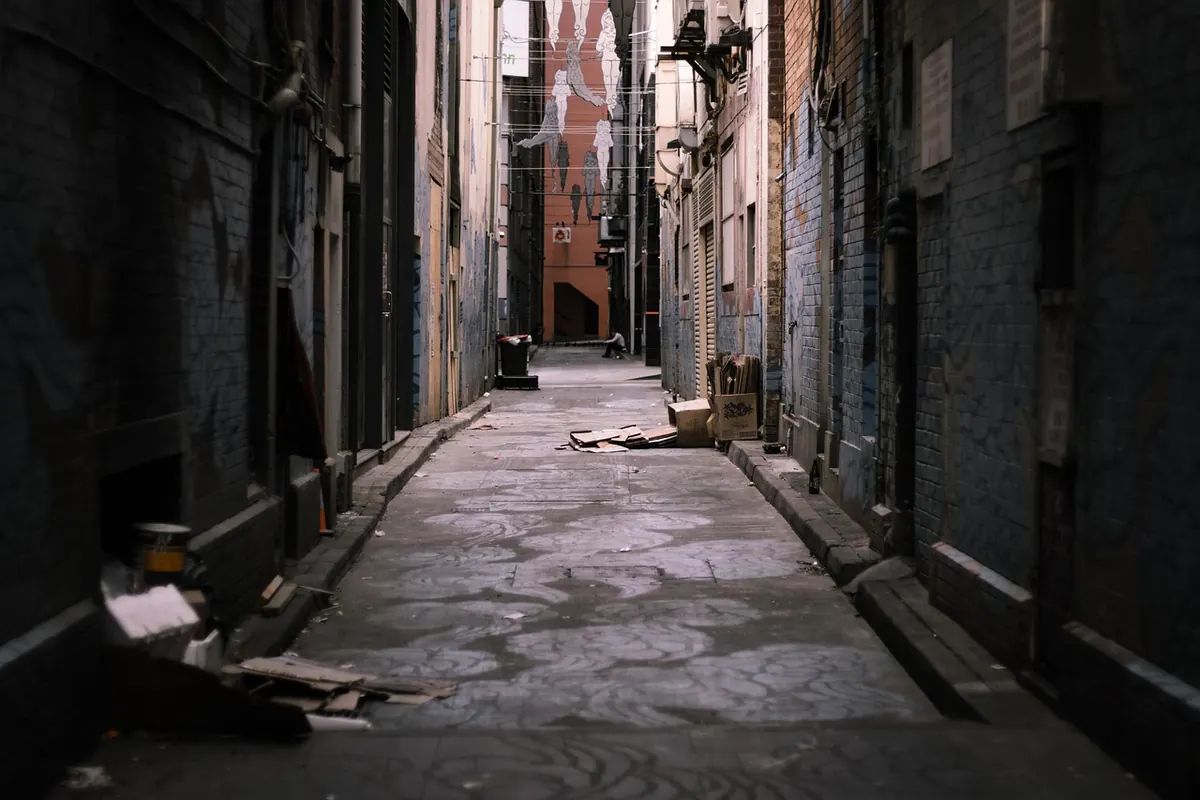
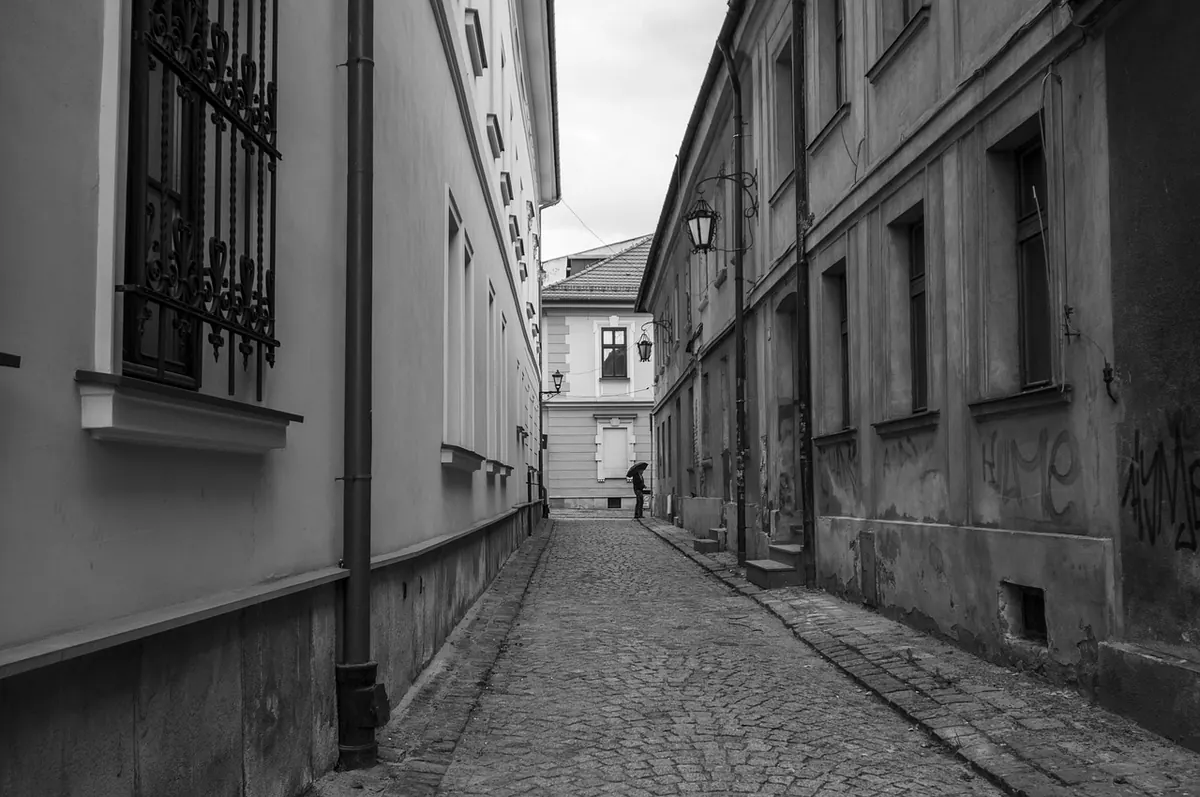
An alley gives you about ninety seconds if you walk it the way you walk to the pharmacy. Give it forty minutes and it becomes a small museum with no labels: everything on display, nothing explained. The trick is not expertise. It is a sequence. Choose one alley — the one you pass without thinking, behind the church or between the bakery and the shuttered workshop — and walk it with a list instead of a camera. What follows are ten details worth stopping for, roughly in the order you will meet them.
Doors are where an alley keeps its records, because doors are the parts people repair one piece at a time instead of replacing whole. Stand slightly to the side of a doorway, not in front of it, and look at the edge where the door meets the frame.
Hinges. Old doors hang on long strap hinges that reach across the boards, nailed in place with rose-headed nails; newer ones use stubby hinges set into a mortise. You can read a building's budget history in that difference. Look for the pale rectangle of unpainted wood where a hinge was moved, the screw holes that no longer hold anything, the extra bolt added after some forgotten break-in. A hinge plate polished bright on its lower half means the door has been swinging for a very long time.
Threshold stones. The slab under the door is usually a different stone from the paving: harder, greyer, sometimes marble stolen from somewhere grander. It is often hollowed into a shallow dish by generations of feet, and the hollow tells you which side people entered from. Look for initials, a date, a mason's mark, an iron strip screwed down to stop the wear. A bright crescent scraped into the stone means the door has been dragging there since before anyone now living was born.
Beyond the threshold, if the door is open, notice the boot scraper — a small iron blade set into the wall beside the step, sometimes shaped like a tiny arch. Nobody installs those anymore, and nobody removes them either. A good rule for the whole walk: never step into a doorway, courtyard or private passage to get a better look. Everything worth seeing here can be seen from the street.
Alleys are dense with hardware that outlives its purpose. Two or three steps in, look at the wall at waist height.
Knockers, handles and keyholes. Knockers sit at the height of the person who installed them, which is why some are at your shoulder and some at your knee. Keyhole plates — escutcheons, if you like the proper word — are often the only brass left on a street, worn to an oval by thumbs. Doorbells arrive in layers: a porcelain button, a 1970s plastic square, a blank plate where a name was removed.
Rings and hooks. Iron rings set into the wall once held horses, carts, or the rope of a canopy. Hooks held lamps, awnings, drying racks, or the chain of a shutter. A ring worn thin on one side shows the direction the rope pulled. These are the cheapest details to find and the easiest to miss, because they sit exactly at the height the eye skips over.
Walls in a narrow alley have been edited more than written. Look for the edits.
Plaques and numbers. Street-name plaques are usually the most formal object in the alley, and often the newest. Below them you will find older numbering: ceramic tiles, painted numbers on plaster, a small marble square with a family name and a trade. Some mark the height of a flood; some mark a workshop; some are simply a household's quiet assertion that it has been here a while.
Walled-up doors and patched brick. Find a doorway that goes nowhere and you can usually date the change. The lintel is still in place. The sill remains, with nothing on it. The brick infill is a slightly different colour, laid in a different bond, and the plaster around it has been patched in a rectangle that never quite matches. Sometimes the outline of old steps survives as a shadow in the render.
Ghost signs. Painted lettering fades into the wall until it becomes texture — until the light hits at a low angle and the words come back for twenty minutes. Look for doubled outlines where a sign was repainted, and for lettering that runs across a later patch of cement, which is how you know the wall was repaired after the paint went on.
Halfway along, stop and tilt your head back. The upper storeys are where the alley is least maintained and most honest.
Brackets and lamps. The iron arm of a street lamp often predates the lamp by a century. Look for the stub of a bracket with nothing on it, or a lamp bolted to a bracket built for something heavier.
Downpipes and water marks. Rain writes on walls. A downpipe repaired at three different joints leaves a map of every leak it has had: dark streaks below the joint, a pale fan where water spread, moss in the shade, a stain shaped like a wine glass where the flow split. Splash marks at the base show where the pipe ends short of the drain.
Lines and eaves. Laundry pulleys, awning frames, and the brackets that held them sit high and rust quietly. Up at roof level, count how many different tiles you can see and how irregularly the eaves overhang. Two buildings that look identical at street level rarely are up there.
Before you leave the alley, look down. Then look at the corner where the light does not reach.
Worn steps and corner guards. Steps in a lane are dished in the middle, polished at the edges, patched with cement that has since worn faster than the original stone. At tight corners, a stub of stone or a short iron post protects the masonry from cart wheels — and the masonry behind it is usually intact while the rest of the wall is bruised.
Shadows. Every alley has one corner that stays dark all day, one wall that dries faster, one patch of damp that keeps its own weather. A bracket casts a shadow that draws its shape on the plaster only at certain hours. Notice where the shadow line falls, then come back two hours later and notice it has moved.
If you want to carry the walk in your pocket, this is the whole of it:
Pick an alley under two hundred metres. Walk it once at normal speed to map the doors and corners, then turn around and walk it again slowly. Early morning and late afternoon give you raking light, which is what makes faded paint and shallow carving legible; flat midday light hides both. Carry a notebook rather than a camera for the first pass, and write what you noticed before you photograph it, or you will spend the walk arranging shots and miss the wall itself.
Go quietly. Do not try door handles, do not photograph through windows, and do not lean on shutters or old ironwork that may already be loose. If someone is standing at a door, ask before you look too closely; most people will tell you more than you expected, and that conversation is often the best find on the street. Keep the checklist somewhere you can find it again, and walk the same alley in a different season. The shadow moves. The wall does not.
Photo: Squirrel_photos / Pixabay
Previous Post
7 Common Mistakes Visitors Make in Local Corner Cafes
Next Post
Seasonal Guide to Evening Walks in the Neighborhood: Spring vs. Autumn